
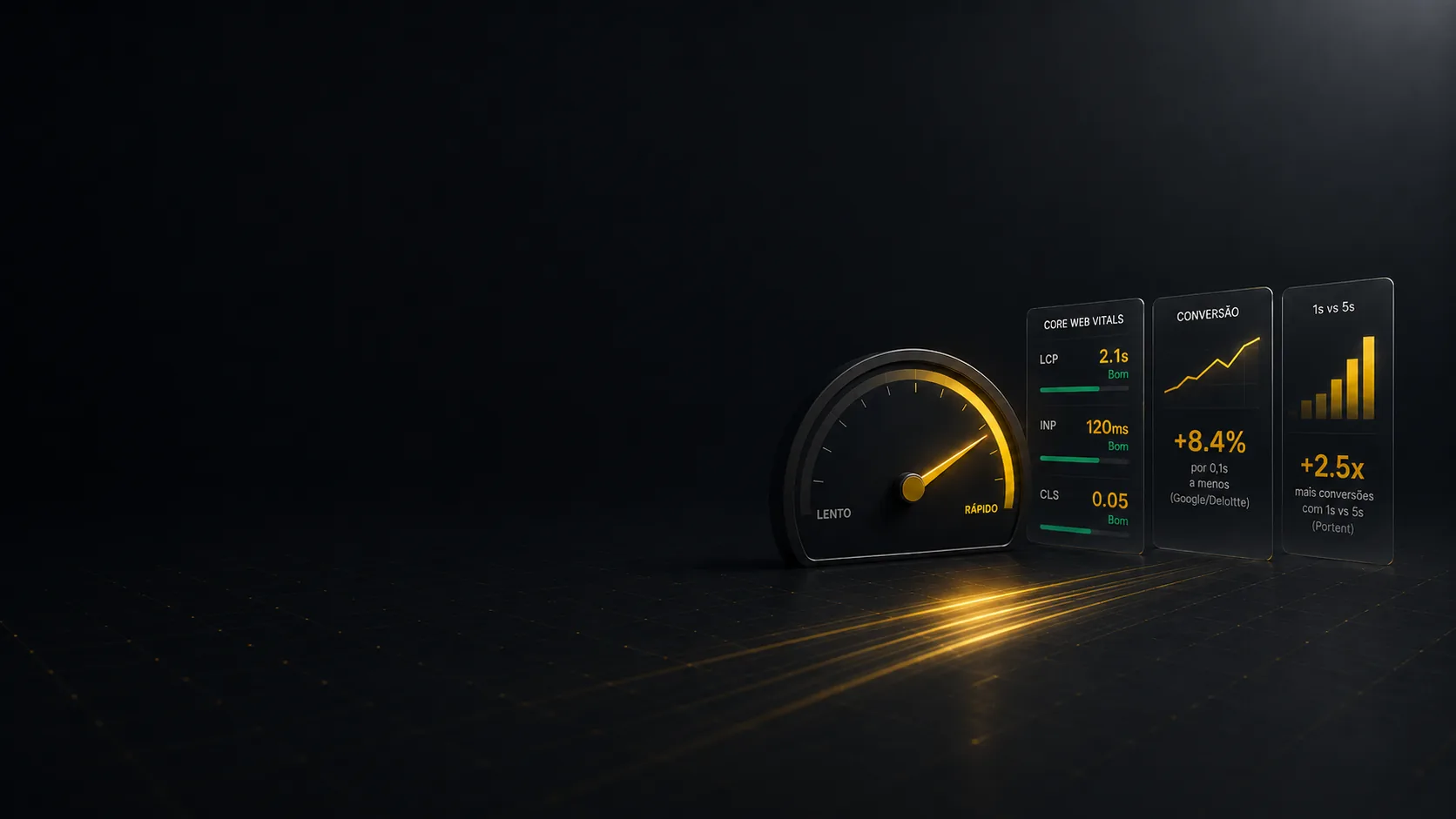
Every extra second of load time drops your conversion.
Your slow site burns ad budget and disappears from search.
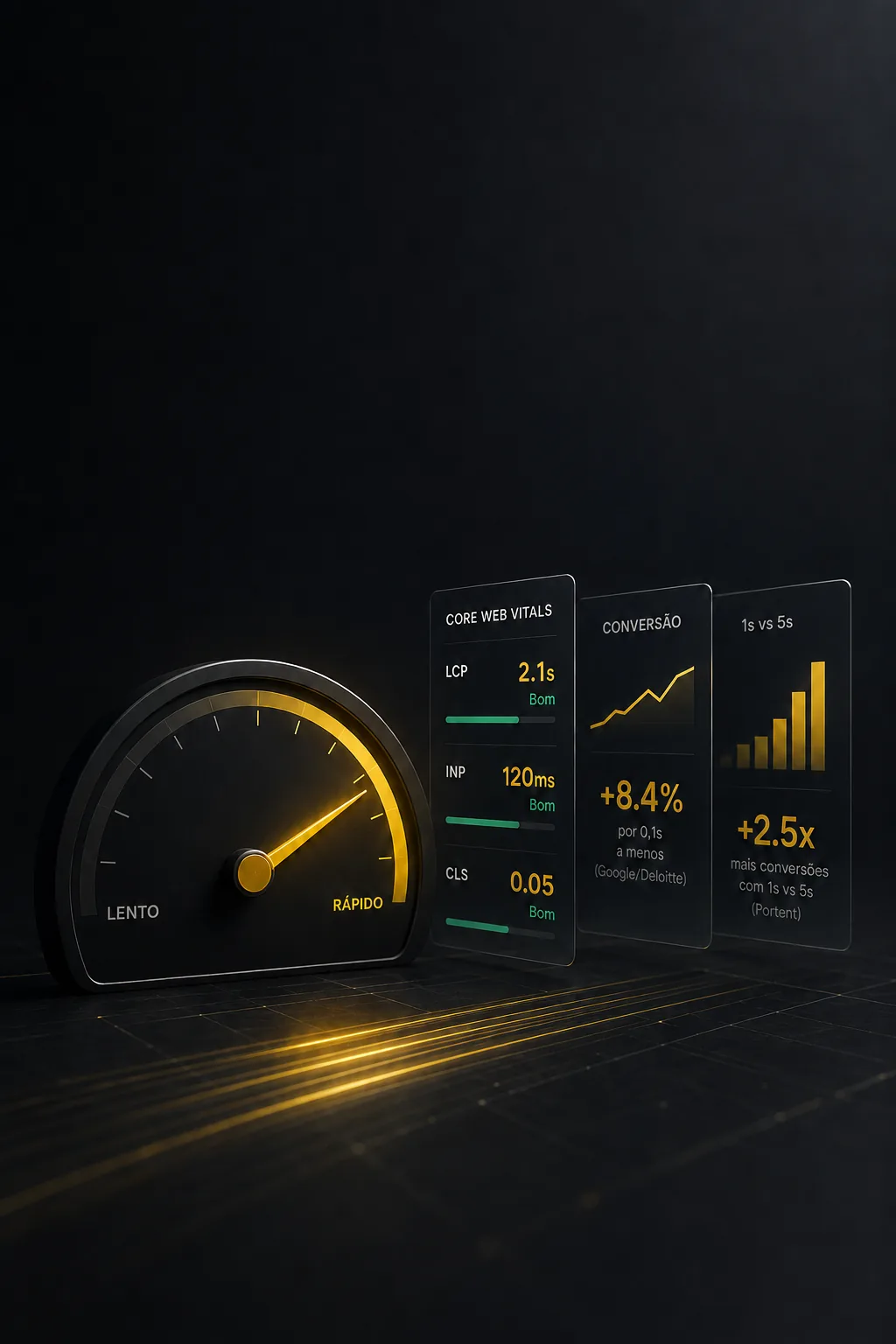
Revenue loss that Analytics doesn't show.
A site that takes 4–8s on mobile loses the customer before showing the offer. Google penalizes it, and Meta Ads wastes budget sending traffic to a slow landing page - you pay for the click and lose the conversion.
Sites built desktop-first can't handle mobile. High LCP, layout that “jumps” (CLS), laggy interaction (INP). It's revenue loss that doesn't even show up in Analytics - because Analytics only shows who waited for the load.
The same site, two different foundations.
Speed becomes revenue.
Verified data from public studies. Performance rarely decides ranking on its own - but it decides conversion and media cost.
Vodafone Italy reduced LCP by 31% (+15% in leads per visit).
Tokopedia reduced LCP by 55% - with +8% conversion.
Redbus optimized CLS, TTI and TBT.
Amazon's classic experiment that turned latency into revenue.
When load time goes from 1s to 3s.
Why does Lighthouse give me 40 on mobile and 85 on desktop?+
Because the site is desktop-first. Mobile demands a different stack - native rendering, image optimization and edge cache. It's not the same site “but smaller”: it's an architecture designed for the phone's connection and hardware.
What is LCP and why does it matter?+
LCP is the time until the main content appears on screen. Above 2.5s Google penalizes your ranking and the user gives up before seeing your offer.
Is it worth optimizing if I already have traffic?+
Yes - and it's the best-case scenario. Improving LCP increases the conversion of the traffic you already pay for, without spending a single cent more on ads.
Want to see your site's performance score?
Run the free audit and find out, in under a minute, where your site loses speed - and conversion.